Work like an AI-native law firm.
Without building the system yourself.
DocketDrafter gives Claude and ChatGPT a ready-to-use litigation workspace: court templates, forms, and your prior work. Drafts come out the way your firm files them.
Start with support built for your jurisdiction.
DocketDrafter includes templates and formatting rules for state courts and every federal district court within that state, plus supported official forms and drafting workflows.
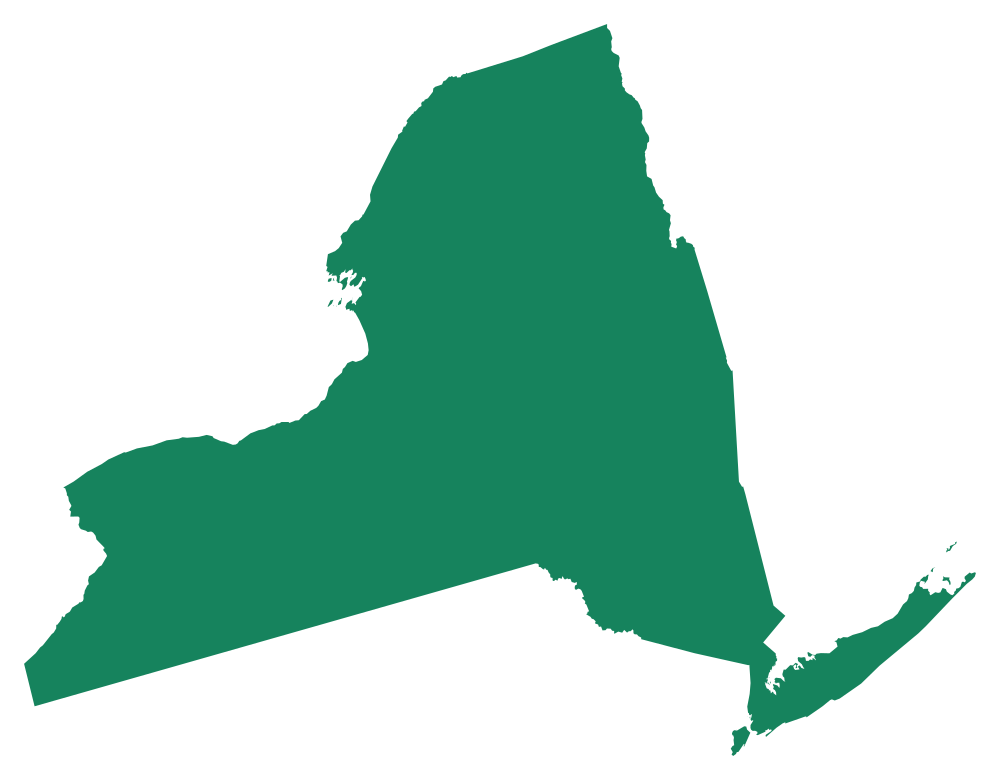
New York
- Supreme Court pleadings, motions, affirmations, and affidavits
- SDNY, EDNY, NDNY, and WDNY pleading and brief templates
- UCS-840 RJIs and applicable RJI addenda
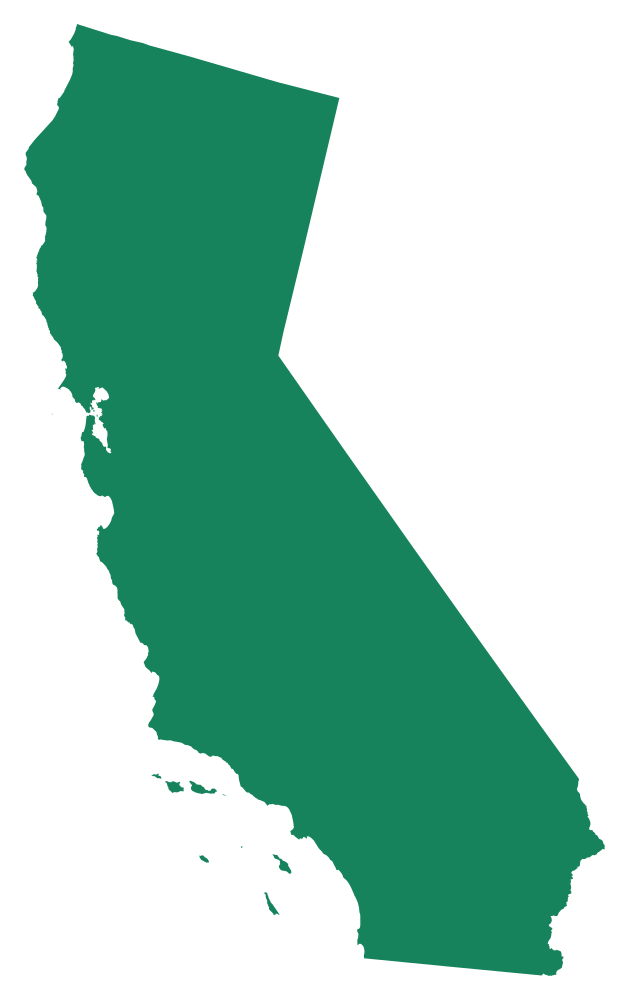
California
- Superior Court pleadings and motions on 28-line pleading paper
- NDCA, EDCA, CDCA, and SDCA pleading and brief templates
- CM-110, CM-010, and supported Judicial Council forms
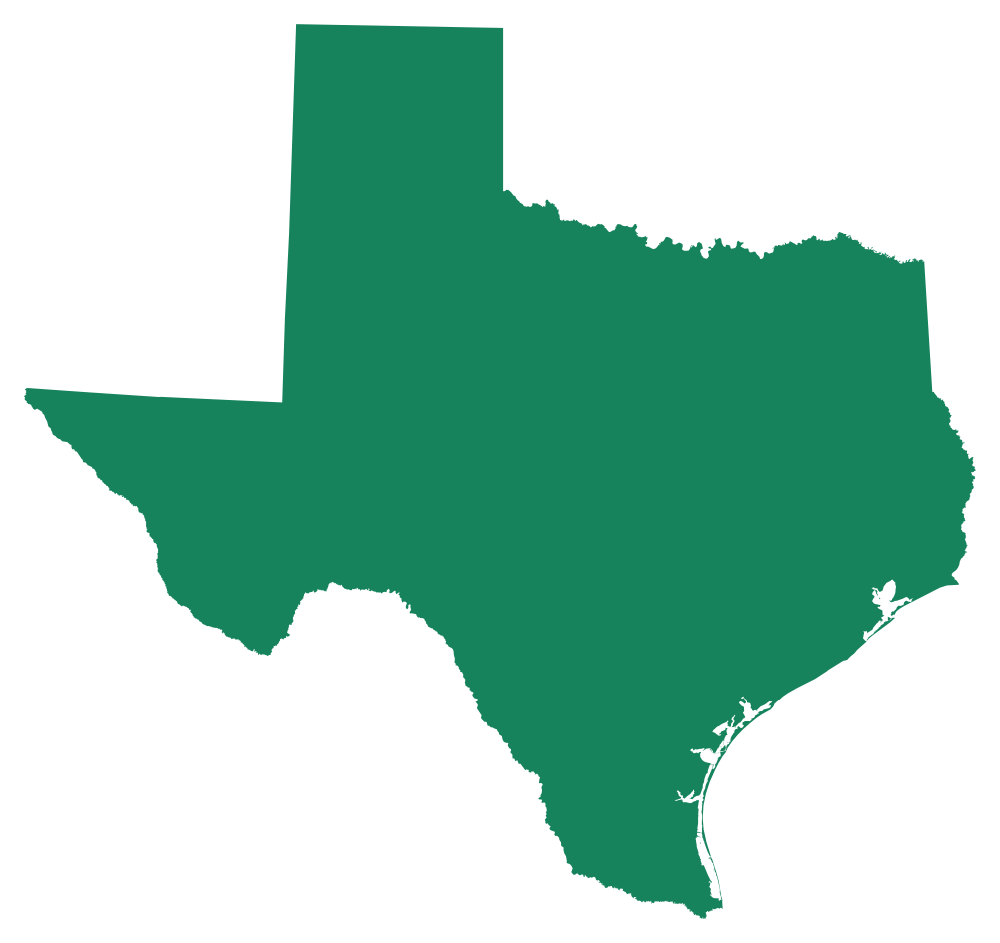
Texas
- Original petitions, answers, motions, and proposed orders
- Required disclosures and Texas written discovery
- N.D. Tex., S.D. Tex., E.D. Tex., and W.D. Tex. templates
Appellate
One working brief with full history, tables that stay right, and a cite-check spreadsheet.
Explore DocketDrafter for appellateImmigration
USCIS and California SIJ forms filled from the client’s file, plus NOID and RFE responses.
Explore DocketDrafter for immigrationPractice somewhere else? Tell us where you practice.
A blank chat is not an AI workflow.
Advanced AI users surround Claude and ChatGPT with prior work, court templates, and document workflows. DocketDrafter includes it all.
Build it yourself
- Projects, skills, and prompts to assemble
- Court templates and forms to find and maintain
- Word formatting to fix by hand
- Separate setups for every team member and AI tool
- An internal power user becomes the support desk

Start with DocketDrafter
- A litigation workspace ready to use
- Supported templates and forms included
- Documents formatted to your firm's standards
- One shared workspace across your team and AI tools
- Onboarding, coaching, and maintenance included
“We’re taking on more cases because we use DocketDrafter.”
 Brian LehmanNew York litigation attorneyRead Brian's story
 “The editing process with co-counsel was seamless, and hours of time came back to me.”
 Richard SerpePlaintiff trial lawyerRead Richard's story
 Start with a workspace that already works.
Court templates and forms are already in place, so your firm can start without sending us anything. Add your formatting and prior filings whenever you want them.
Choose your workspace
Start with a ready-to-use New York, California, or Texas workspace, or tell us where you practice and we will build yours.
Connect your assistant
Keep working through Claude Cowork, ChatGPT Work, or another supported agent. There is no new legal chatbot to learn.
Draft your filings
Ask in plain English, get a Word or PDF document back, and the fixes you make carry forward to the next one.
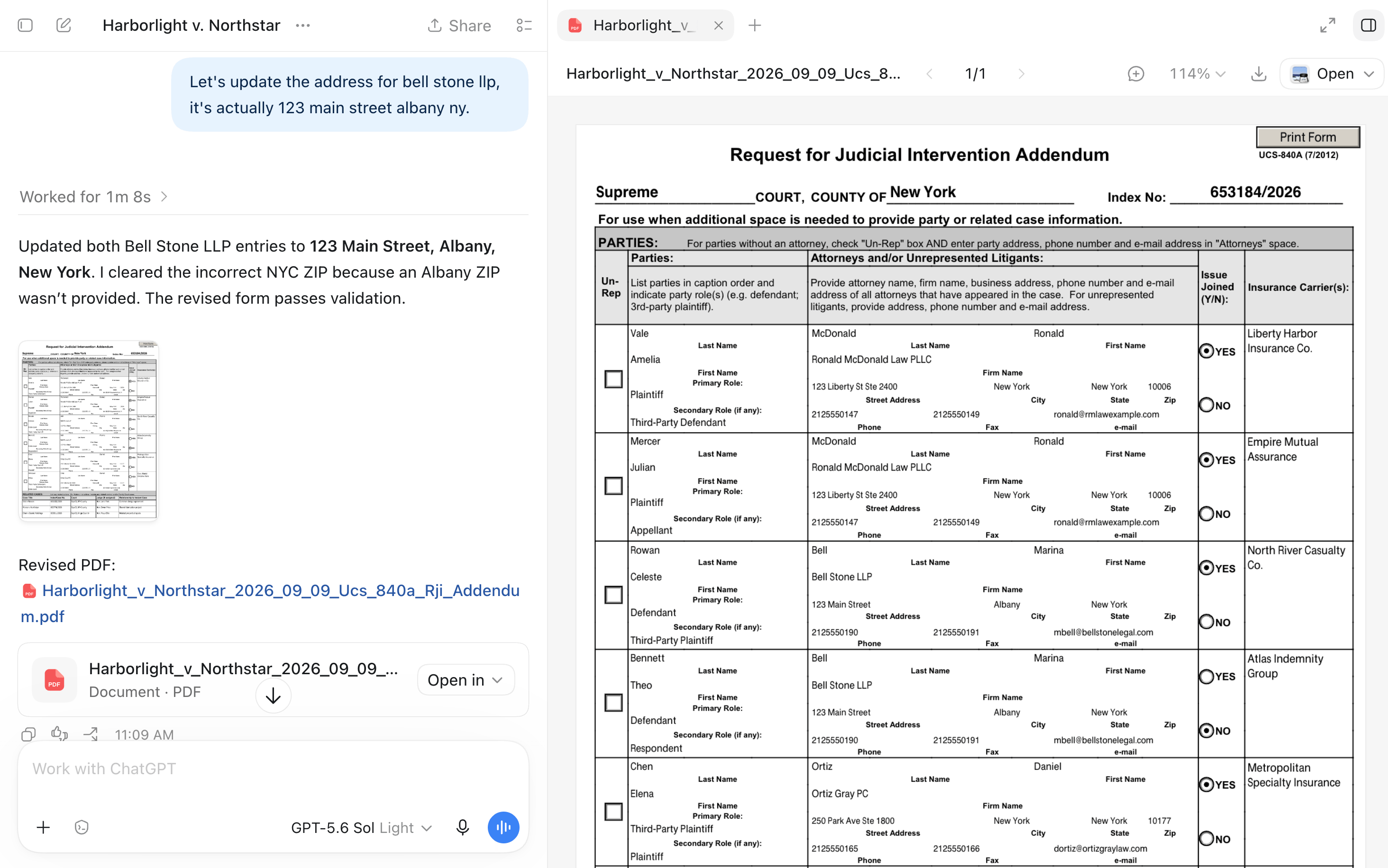
The court forms you need, ready to fill.
DocketDrafter gives Claude and ChatGPT the configured official form instead of asking AI to find or recreate it. Examples include California CM-110 case management statements and New York RJIs with applicable addenda.
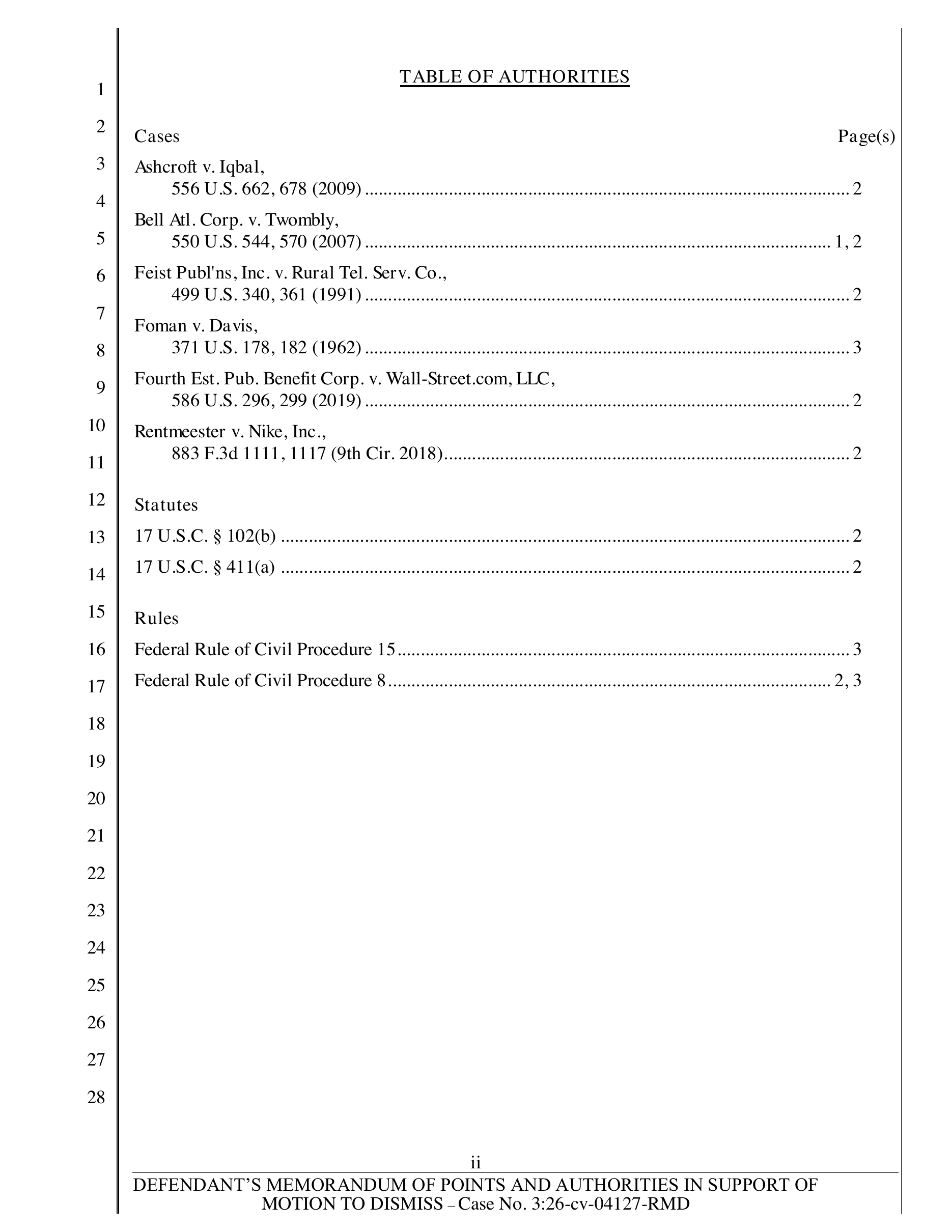
From your research to a finished brief.
- Table of authorities with page references
- Hyperlinked citations
- Optional agent review against the source opinions
- Reviewed authorities saved for reuse
Frequently asked questions
No. You do not need to program, create skills, or become a prompt engineer. We connect your assistant, provide live training, and help attorneys and staff learn the prompting and review basics through real legal work.
Explore free Claude training for lawyersYes. Each firm has its own isolated, versioned workspace. Your documents, templates, and drafting rules are confidential, never shared with another firm, and never used to train a model. Your firm owns what it puts in and the documents it drafts. Data is encrypted at rest, and if you ever leave, we can provide the underlying data and delete firm work within 30 days.
DocketDrafter works with Claude Cowork, ChatGPT Work, Claude Code, Codex, Viktor, and other supported agents. Your firm can use the same maintained workspace without rebuilding its document system around each assistant.
Nothing is required to begin with a supported New York, California, or Texas workspace. Tell us where you practice and the documents you prepare. You can add preferred templates, letterhead, prior work, and firm guidance when useful.
No. Word remains the review surface your lawyers and co-counsel already know. Edit text, use Track Changes, or leave comments as usual. Upload the reviewed DOCX and Claude or ChatGPT can continue from that version instead of an outdated draft. DocketDrafter stores the document along with the firm's formatting and court conventions.
At the attorney’s request, DocketDrafter gives Claude or ChatGPT a structured citation-review workflow. The assistant can assign small groups of cases to independent reviewer agents, require each reviewer to read the full brief and source opinions, and flag issues for attorney review. Attorneys remain responsible for the research and final filing.
Explore citation workflowsYes. Supported brief templates generate a table of contents from the document headings and a categorized table of authorities from cited cases, statutes, rules, and other authorities.
See linked citations and brief tablesDocketDrafter is built primarily for court-document workflows. That includes pleadings, motions, briefs, petitions, affidavits, proposed orders, related filing packages, and supported official court and USCIS forms. It also covers the drafting around a filing: discovery demands, stipulations, and letters. We can start with standard templates for a supported jurisdiction, adapt documents your firm already uses, or configure a recurring official form workflow.
See USCIS and immigration formsYes. Each document drafted through DocketDrafter can become part of your firm library, so a new matter can start from the closest approved answer, motion, complaint, discovery demand, stipulation, or letter.
Yes. One of the main benefits is turning one attorney's AI workflow into a shared firm system. Other attorneys and staff can work from the same examples, rules, and review history without becoming prompt engineers.
You can, and some firms start there. The cost shows up later, in upkeep: court templates and forms to find and keep current, Word formatting to fix, and a separate setup for each assistant your team uses. Usually one attorney ends up owning all of it. DocketDrafter maintains that layer instead, and the same workspace works across supported assistants.
How one litigator with his own AI workflow made the switchNo. DocketDrafter is focused on drafting: the firm workspace, prior work, templates, version history, citation review, and Word/PDF output. It can complement practice-management tools, but it does not replace docketing, calendaring, or case management software.
Still have questions? Book a call