
DocketDrafter in Practice
One Tuesday at a North Carolina appellate firm.
DocketDrafter works inside Claude and ChatGPT. Ask, and your AI assembles the record on appeal and the Rule 9(d) volume from the trial court file: the cover, the index, continuous page numbers on every page, and slip sheets for duplicate exhibits. When the record changes, every page number that depends on it changes too.
Ask your AI what this would do for your firm


9:05 AM
9:05 AM
Appellee’s counsel signed the stipulation last night. The record goes to the Court of Appeals this week.
The record is ready, and nobody numbered a page by hand.
Claude CoworkHartsell – record on appeal The stipulation is signed. Put together the printed record and the Rule 9(d) volume for Hartsell.Read 16 files, used DocketDrafterBoth volumes are ready. The printed record runs 24 pages and the Rule 9(d) volume 51, each with its cover and index. Every page carries its record page number, the trial court’s scanned papers included. The stipulation gives both page counts, and the Statement of Transcript Option is cited at the page where it actually prints.
Record on Appeal and Rule 9(d) Volume – Hartsell Mechanical v. Pruitt RidgeDocuments · PDF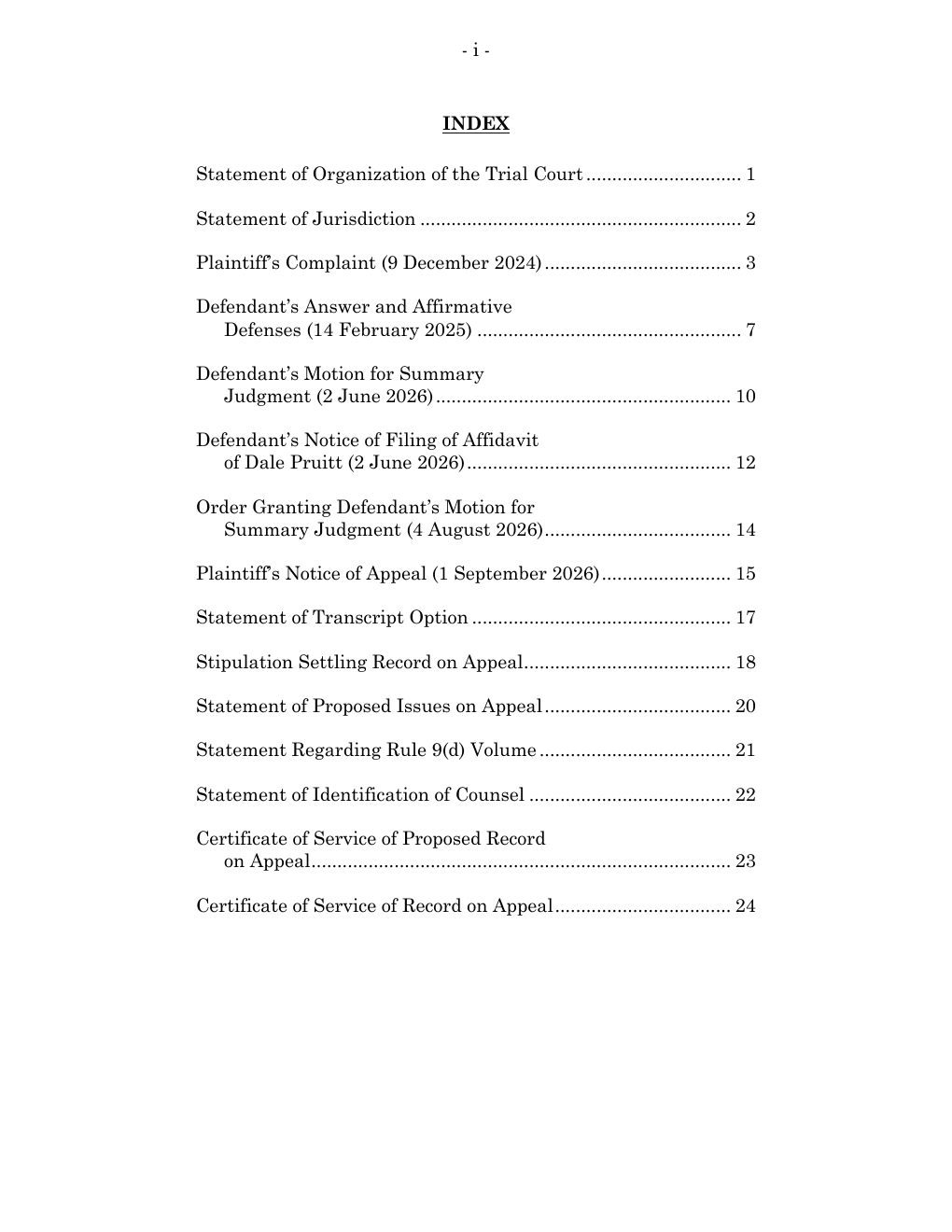
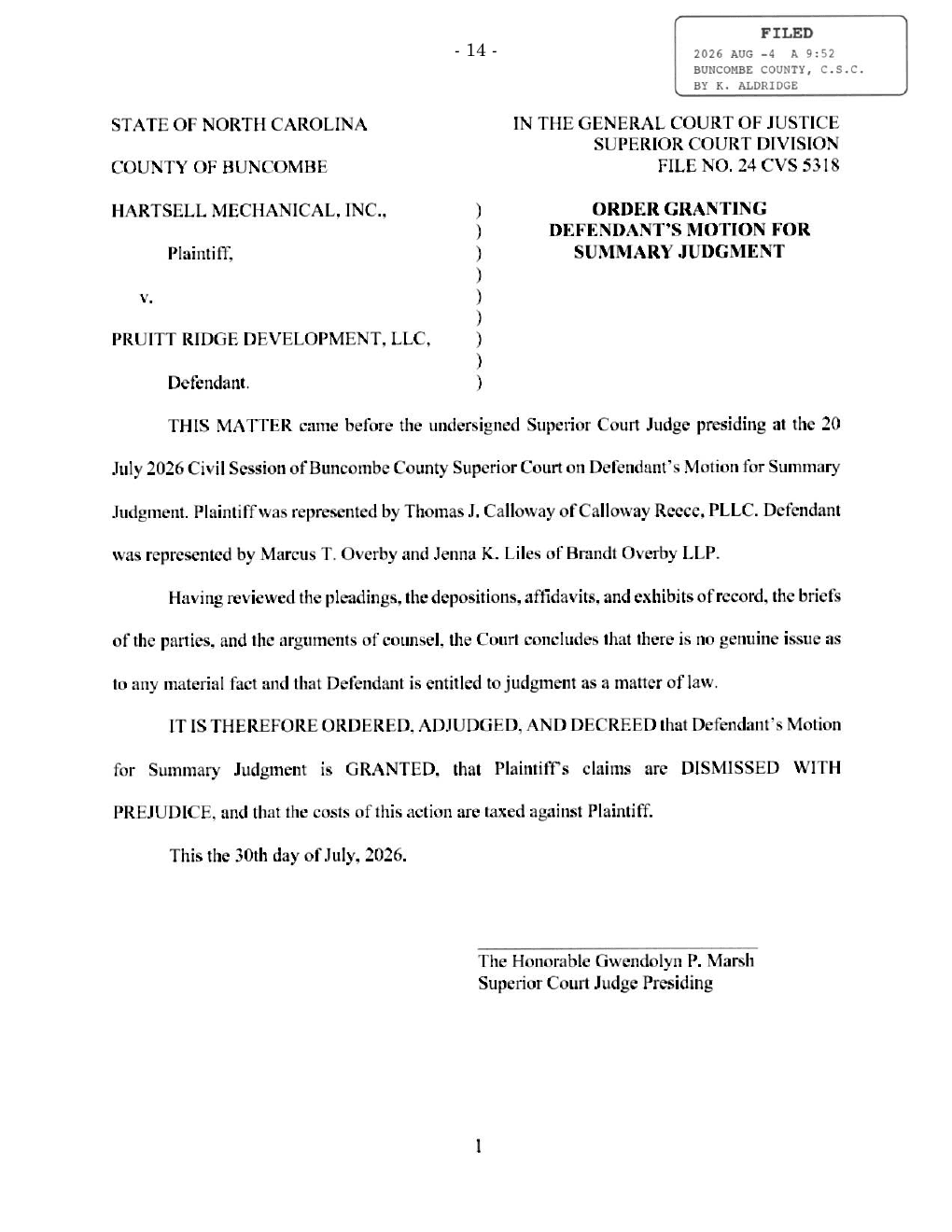
The record’s index, and the trial court’s order on page 14, where the index says it is. 11:20 AM
11:20 AM
Appellee’s counsel called back. They want the affidavit from their summary judgment motion in the record after all.
One more document, and every page number after it moves on its own.
Claude CoworkHartsell – record on appeal Add their Notice of Filing of the Pruitt affidavit to the record, right after their motion for summary judgment.Used DocketDrafterAdded at page 12. Everything after it moved two pages: the order is now at 14, and the record runs 24 pages instead of 22. The index, the stipulation’s page count, and the cite to the Statement of Transcript Option all changed with it. Nothing before page 12 moved.
Record on Appeal – Hartsell Mechanical v. Pruitt RidgeDocument · PDF2:00 PM
2:00 PM
Both sides attached the subcontract and the close-out emails to their summary judgment briefs.
The duplicates are out, and each slip sheet names the right pages.
Claude CoworkHartsell – Rule 9(d) volume Their brief repeats our Exhibits C and D. Replace their copies in the 9(d) volume with slip sheets.Used DocketDrafterDone. Their Exhibits 1 and 4 are now slip sheets pointing to the originals at Doc. Ex. 27-30 and 31-33, and the volume came down from 56 pages to 51. If anything ahead of those exhibits moves, the slip sheets will follow it.
Rule 9(d) Volume – Hartsell Mechanical v. Pruitt RidgeDocument · PDF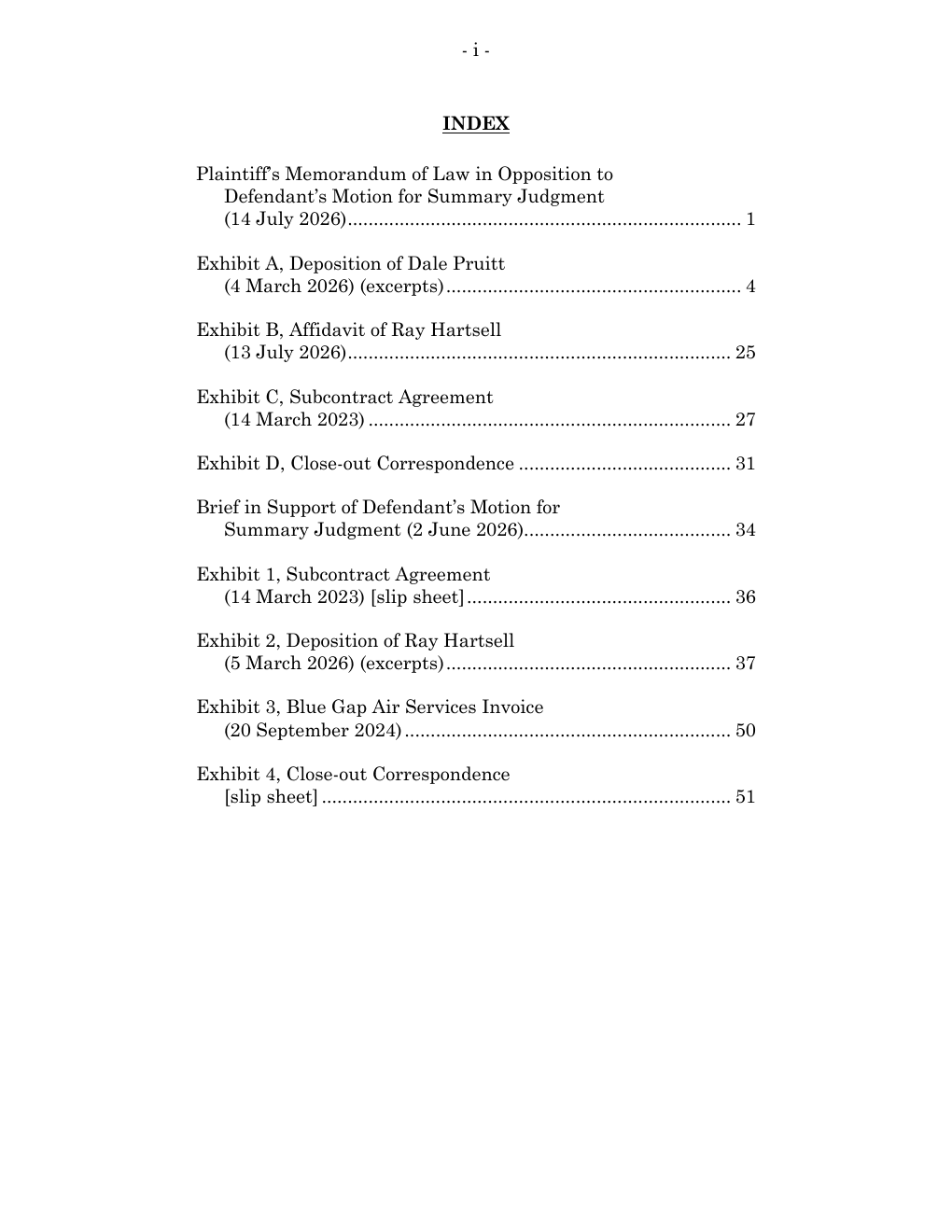
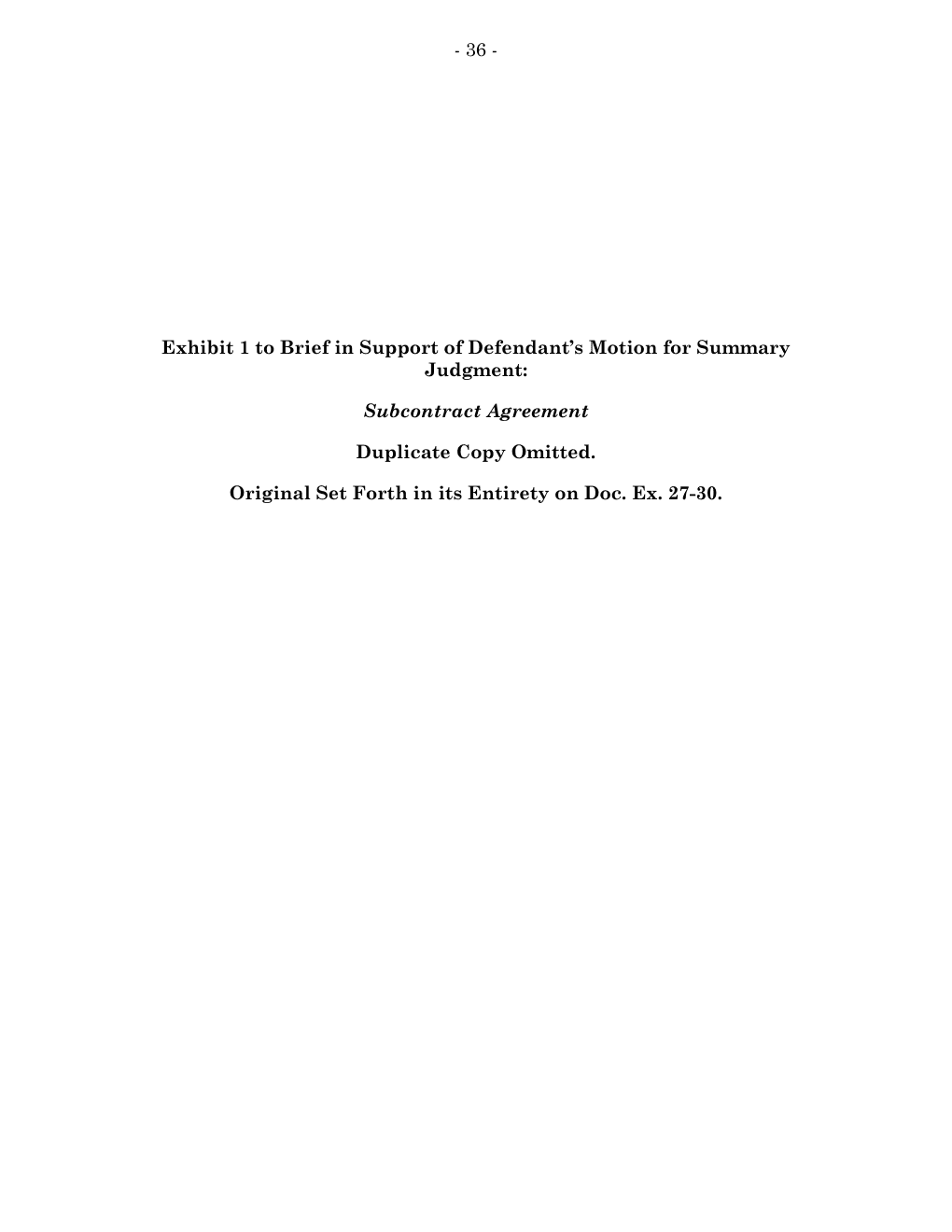
The Rule 9(d) volume’s index, and the slip sheet that replaces the appellee’s copy of the subcontract. 4:30 PM
4:30 PM
The brief is due thirty days after the record is mailed. The partner wants the facts in draft before the argument.
Record cites that point to the right page.
Claude CoworkHartsell – appellant’s brief Draft the statement of the facts from the record and the 9(d) volume. Cite the R and Doc. Ex. pages.Read 2 files, used DocketDrafterThe statement of the facts is drafted, and every cite goes to the stamped page: the order at R p 14, the close-out email at Doc. Ex. 32. Pruitt Ridge’s admission that it never objected to the lien waiver is only in the excerpts at Doc. Ex. 7-9, so I quoted it from there and flagged it for you to check against the full transcript.
Appellant’s Brief – Statement of the FactsDocument · DOCX6:40 PM
6:40 PM
An associate spent the afternoon on the argument. The partner wants her first issue statement back.
Two people editing one brief, and a redline whenever you want one.
Claude CoworkHartsell – revisions What has changed in the brief since this morning? Put the first issue statement back the way I wrote it.Used DocketDrafterHere is a redline of everything changed since this morning. The first issue statement is back to your wording, and the rest of her work is untouched, record cites included. Both versions are kept if you change your mind.
Appellant’s Brief – revision historyDocument · DOCX
Your firm can be working this way in minutes, not months.
No onboarding work, no manual setup.
Not in North Carolina, or not doing appeals? Ask your own Claude or ChatGPT what DocketDrafter would do for your practice, or see the other practices we have written up.
Ashby & Whitlock, PLLC is an invented firm, and every party, lawyer, judge, matter and appeal on this page is invented. The rules are real.